Why Your Dishwasher Smells (and the 15-Minute Fix Most People Miss)
A funky dishwasher isn’t “just how they are.” Learn the simple spots that trap gunk—filter, spray arms, seals—and how to clean them fast so dishes come out fresh again.
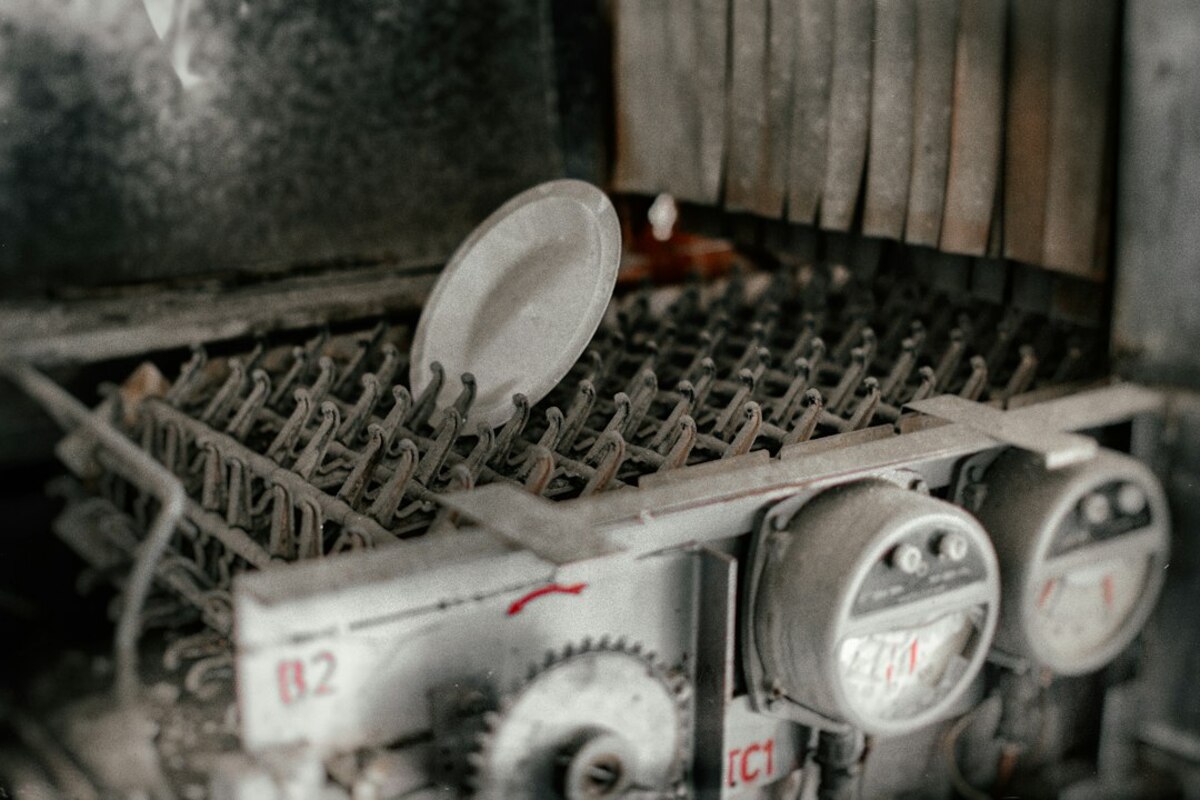
The smell isn’t in the water—it’s in the places water doesn’t reach
Dishwashers feel like they should clean themselves. They blast hot water, they use detergent, and they literally exist to wash dirty things. So when you open the door and get hit with a sour, fishy, swampy, or “old wet sponge” smell, it’s confusing—and a little insulting.
The key idea is simple: dishwashers are great at moving water around, but they’re not great at scrubbing every crevice. Food scraps, grease, and soap residue collect in spots where the spray is weak, the water sits, or the design intentionally traps debris (like a filter). Over time, that buildup becomes a buffet for odor-causing bacteria.
Picture it like a busy kitchen sink. Even if you run hot water through it, the sink strainer still catches bits. If you never empty it, it will smell. Your dishwasher has its own “strainer moments,” just hidden behind panels and under racks.
Here are the usual odor hotspots, explained in plain terms:
- The filter area: designed to catch food particles so they don’t redeposit on dishes. If it’s overloaded, it becomes a damp compost pile.
- The drain zone / sump: the low point where water collects before being pumped out. Small scraps can sit there between cycles.
- Door gasket (rubber seal): a soft edge that stays wet and loves to hold onto grease film.
- Spray arms: tiny holes can clog with seeds, paper labels, or hard-water minerals, reducing cleaning power and leaving more grime behind.
- “Top corners” and the lip under the door: areas that get splashed but not truly flushed.
One common real-life scenario: you load plates with “mostly scraped” leftovers, run eco mode (cooler water, shorter drying), and leave the dishwasher closed overnight. The moisture + leftover fats + trapped particles = a perfect smell incubator by morning. It’s not that you did anything outrageous—it’s that modern cycles are efficient, not aggressive.

The 15-minute routine that usually fixes it (no special tools)
You don’t need a service call for most dishwasher smells. You need a short routine that targets the places the dishwasher can’t fully clean by itself. Set a timer for 15 minutes. If you want, put on music. This is more “wipe down a coffee machine” than “deep clean an engine.”
Step 1: Pull and rinse the filter (5 minutes)
Most modern dishwashers have a removable filter at the bottom—often a cylinder or twist-lock piece. Remove the bottom rack, then find the filter assembly. Twist and lift it out (the exact motion varies, but it’s usually obvious).
- Rinse it under hot running water.
- Use a soft brush (an old toothbrush works) to loosen greasy film.
- If it feels slippery, that’s grease. Keep brushing until it feels more “plastic” than “waxy.”
Step 2: Clean the filter well and the drain zone (4 minutes)
With the filter out, look into the well where it sits. This area often holds the “mystery” smell.
- Wipe the area with paper towel or a microfiber cloth.
- Remove visible bits (pasta, rice, seeds).
- If there’s standing water, that’s normal in many models—but it shouldn’t smell rotten.
Step 3: Check spray arms for clogs (3 minutes)
Spray arms are like little irrigation systems. If the holes clog, the dishwasher becomes a lazy sprinkler instead of a power washer.
- Spin the spray arms by hand; they should rotate freely.
- Look closely at holes for debris. A toothpick can dislodge particles.
- If your model allows easy removal, rinse the arm under a tap and flush water through the center.
Step 4: Wipe the door gasket and edges (2 minutes)
The rubber seal is basically a damp hoodie sleeve for odors—absorbing moisture and collecting grease. Wipe it with a cloth dipped in warm water and a little dish soap. Focus on folds and corners.
Step 5: Run a hot cleaning cycle (or the hottest normal cycle) (1 minute to start)
After the quick manual clean, let the dishwasher do what it does best: rinse away loosened grime with heat. Run the hottest cycle you have. If your machine has a “Machine Clean” or “Sanitize” option, use it.
| Smell type | Most likely source | Fastest fix |
|---|---|---|
| Sour / “wet towel” | Filter + door gasket film | Rinse filter, wipe gasket, run hot cycle |
| Fishy / rancid | Grease buildup in filter well and edges | Brush filter, wipe sump area, hot wash |
| Eggy / sulfur | Stagnant water + food bits (sometimes drain issues) | Clean filter well, check drain hose loop, hot wash |
| Mildewy / musty | Moisture trapped after cycles | Crack door open to dry; clean gasket |
If you do only one thing, do the filter. People are often shocked at how much grime collects there—even in dishwashers that “look clean.”
Common causes (and the easy habits that keep smells from coming back)
Once the smell is gone, the next question is: why did it happen at all? In most homes it’s not one dramatic mistake—it’s a handful of small habits that quietly add up. Think of it like body odor: one workout won’t do it, but enough sweat without airflow will.
Cause 1: You’re using eco/quick cycles for heavy messes
Eco modes often use lower temperatures and less water to save energy. That’s great for lightly soiled dishes. But greasy pans, creamy sauces, and plates with sticky starches need heat and time. If the cycle is too gentle, residue remains and becomes odor food.
- Habit to try: Use eco for light loads, but run a hot/heavy cycle once a week (or after very messy meals).
Cause 2: The dishwasher stays closed and wet after a cycle
When the cycle ends, the inside is a warm, humid cave. If it stays sealed for hours, moisture clings to seals and corners. That’s how musty smells start.
- Habit to try: When the cycle finishes, crack the door open 1–2 inches for 20–30 minutes. It’s the dishwasher equivalent of opening a window after a shower.
Cause 3: “Pre-rinsing” the wrong way (or not scraping enough)
This one surprises people. You don’t need to pre-rinse to a spotless shine, but you do need to remove the chunks. Large food bits are what overwhelm filters and create odor pockets. Meanwhile, if you pre-rinse everything perfectly clean, some detergents may not work as intended because they’re formulated to grab onto soils.
- Habit to try: Scrape solids into the trash/compost. Don’t stress about a light sauce smear.
Cause 4: Too much detergent (or the wrong type)
More soap doesn’t mean more clean. Excess detergent can leave a film that traps odors and makes the interior feel slick. This is especially common in soft water areas, where detergents foam more easily.
- Habit to try: Use the amount recommended for your water hardness and load size. If you see residue, try less—not more.
Cause 5: Hard water mineral buildup
In hard water areas, mineral deposits can clog spray arm holes and coat the interior, giving grime something to stick to. That doesn’t always create a smell by itself, but it reduces cleaning power—so food residue stays behind and smells later.
- Habit to try: Keep rinse aid topped up (if your dishwasher uses it) and consider a monthly descaling/cleaning cycle if you see white film.
Cause 6: Drain and disposal connections that let odors drift back
If your dishwasher drains through a garbage disposal or sink plumbing, odors can travel backward if the setup is off. One classic issue: the dishwasher drain hose should have a high loop (or an air gap, depending on local practice) so dirty sink water doesn’t backflow into the dishwasher.
If the smell returns quickly even after cleaning, especially with a “sewer-ish” vibe, it can be worth checking the drain hose routing under the sink. (If you’re not comfortable, a plumber can confirm it fast.)
It’s risky. Some dishwashers have stainless-steel interiors, rubber seals, and mixed metals that don’t always play nicely with bleach. The bigger issue is that bleach doesn’t remove the gunk that causes the smell—it can temporarily mask it. Cleaning the filter and seals removes the source.
It’s risky. Some dishwashers have stainless-steel interiors, rubber seals, and mixed metals that don’t always play nicely with bleach. The bigger issue is that bleach doesn’t remove the gunk that causes the smell—it can temporarily mask it. Cleaning the filter and seals removes the source.
Heat and moisture “wake up” odors. A cycle can loosen old residue and warm it up, making the smell more noticeable when you open the door. After you clean the filter area and run a hot cycle, that effect usually disappears.
Heat and moisture “wake up” odors. A cycle can loosen old residue and warm it up, making the smell more noticeable when you open the door. After you clean the filter area and run a hot cycle, that effect usually disappears.
Many models still have filters that benefit from rinsing. “Self-cleaning” often means the machine can handle some debris, not that the filter never needs attention. If you notice smell or gritty residue, the filter is the first place to look.
Many models still have filters that benefit from rinsing. “Self-cleaning” often means the machine can handle some debris, not that the filter never needs attention. If you notice smell or gritty residue, the filter is the first place to look.
One last relatable mini-scenario: If your dishwasher smells fine when empty but stinks when you open it after loading dirty dishes, the machine might not be the main problem. The smell could be coming from food sitting too long. In that case, running a quick rinse-and-hold (if your model has it) or starting the cycle sooner can prevent the “waiting room odor.”
When a dishwasher smells, it’s easy to assume something is broken. Most of the time, nothing is broken—there’s just a small, hidden spot doing a little too good of a job at holding onto yesterday’s dinner.