The Silent AC Efficiency Killer: How a Clogged Condensate Drain Leads to Smells, Leaks, and Weak Cooling
If your AC smells “damp,” drips water, or cools unevenly, the condensate drain may be partly clogged. Here’s a simple, non-scary way to spot it and clear it.
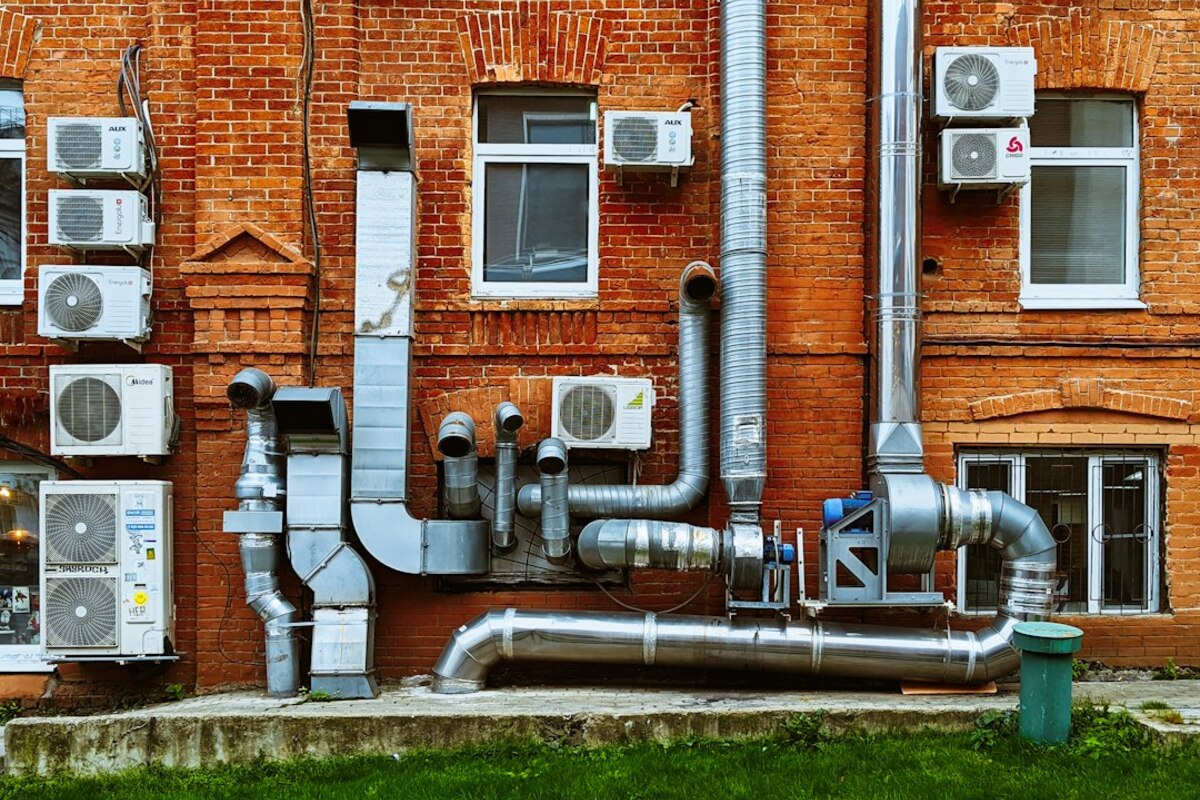
- A partially clogged condensate drain can cause musty odors, water damage, and reduced cooling—even when the AC still “runs.”
- Most drain issues show up as small clues first: a wet spot, a gurgle, a “gym-sock” smell, or a full drain pan.
- You can often clear minor clogs with safe steps (wet/dry vac, gentle flushing) and prevent repeats with simple habits.
Why your air conditioner makes water in the first place (and where it’s supposed to go)
Here’s a quick mental picture that makes the whole problem easy: your air conditioner is like a cold soda can on a hot day. When warm, humid air touches something cold, moisture in the air turns into liquid water. That’s condensation—totally normal.
Inside most home and many office AC systems (central air handlers, mini-splits, and some window units), there’s a cold coil that cools the air. As air passes over that coil, water forms and drips into a shallow collection area called a drain pan. From there, it travels through a small pipe—the condensate drain line—and exits somewhere safe (a plumbing drain, a floor drain, or outdoors).
When everything is flowing freely, you never notice it. But the drain line is narrow, usually dark, and often a little warm—basically a cozy tunnel for algae, biofilm, dust, and “gunk” to build up. Over time, that buildup can slow the flow or block it completely.
Think of it like a sink drain that’s slowly collecting hair and soap residue. The water still goes down… until one day it doesn’t. The difference is that an AC drain problem doesn’t always announce itself with an obvious backup right away. It often starts with subtle signs people mistake for “the AC being old” or “summer being extra humid.”

The real-life clues a clogged condensate drain is forming
You don’t need to be an HVAC expert to catch this early. The trick is knowing what to look for—because the most common symptoms feel unrelated at first.
Scenario 1: The “damp basement” smell that comes and goes.
On a humid afternoon, the AC kicks on and you notice a musty odor from the vents. It fades after a while, then comes back the next day. That smell is often microbial growth (biofilm) somewhere damp—frequently in the drain pan or drain line, where water sits longer than it should.
Scenario 2: A small puddle that looks like a mystery leak.
You spot water near the indoor unit (closet air handler, attic access drip, ceiling stain) or under a mini-split wall head. Many people assume it’s “a pipe problem.” But a clogged drain line is one of the most common reasons AC systems leak indoors.
Scenario 3: The AC runs… but the room feels sticky.
Even if the thermostat shows the right temperature, the air can feel clammy when condensation isn’t draining well. If water lingers where it shouldn’t, the system can struggle with humidity control. It’s not always dramatic, but it’s noticeable—like towels taking longer to dry or the room feeling “cooled but not comfortable.”
Scenario 4: The system shuts off randomly.
Many systems have a safety switch (a float switch) designed to prevent water overflow. When the drain pan fills, the float switch can cut power to the AC to stop a bigger mess. That looks like an AC “mystery breakdown,” but it can actually be a drain issue doing exactly what it’s meant to do: save your floor or ceiling.
Here’s a quick symptom-to-cause cheat sheet you can use before you start troubleshooting:
| What you notice | What it may mean | Why it happens |
|---|---|---|
| Musty or “dirty sock” smell when AC starts | Standing water + biofilm | Slow drain lets microbes grow in pan/line |
| Water near indoor unit / ceiling stain | Drain backing up | Clogged line forces water to overflow |
| AC stops and starts, especially on humid days | Float switch tripping | Pan fills faster than it can drain |
| Air feels clammy even when it’s cool | Humidity not being handled well | Poor drainage can worsen moisture issues |
Small warning: The “dirty sock” smell can also come from the evaporator coil itself (not just the drain). But drain issues are common, easy to check, and worth ruling out first—especially if there’s any sign of dripping or pooling water.
A simple, non-intimidating way to check and clear a condensate drain (plus prevention that actually sticks)
Before you do anything: if you see active leaking near electrical components, or if you’re unsure where the indoor unit’s power disconnect is, it’s smart to pause and call a technician. Water + electricity is not the place to “figure it out live.”
For many households, though, a minor clog can be handled with careful steps and common tools. The goal is to remove the blockage without forcing anything, cracking plastic fittings, or flooding the drain pan.
What you may need (pick what applies):
- Wet/dry vacuum (very effective if you can access the drain exit)
- Distilled white vinegar (gentle option for biofilm)
- Warm water for flushing (not boiling)
- Flashlight
- Small towel or paper towels
Step 1: Locate the drain line and the drain exit.
On many central AC systems, the condensate line is a white PVC pipe coming off the indoor air handler/furnace area. It may run to a floor drain, utility sink, plumbing standpipe, or outside wall. Mini-splits often have a flexible hose that routes outdoors or to a drain point.
If you can find the exit point (where water should drip outside), that’s often the easiest place to clear it.
Step 2: Look for the “obvious” first: full pan, slime, or slow trickle.
With the system off, check whether the drain pan looks unusually full or has visible debris. If you can safely remove an access panel (some systems have a simple service door), look for standing water. If you don’t have safe access, don’t force it—use the drain exit method instead.
Step 3 (best DIY method): Use a wet/dry vac at the drain exit.
This is popular because it avoids pushing debris deeper into the line.
- Go to the drain line’s exit outdoors or at a drain point.
- Attach the vacuum hose to the pipe end (a rag or duct tape can help make a loose seal).
- Run the vacuum for about 30–60 seconds.
- Check the vacuum canister: you may see murky water, slime, or small debris.
In many cases, that suction clears enough buildup to restore normal flow immediately.
Step 4: Gentle flush (optional, and only if you can access a cleanout).
Some systems have a small capped “T” fitting (a cleanout) near the air handler. If you’re comfortable removing and replacing that cap, you can pour a small amount of warm water through to see if it flows freely.
- Pour slowly—think “testing,” not “power washing.”
- If it backs up quickly, stop. The line may be significantly blocked.
About vinegar: Many homeowners use a small amount of distilled white vinegar in the drain line occasionally to discourage buildup. It’s a mild approach that can help with biofilm. Avoid mixing cleaners (for example, vinegar and bleach together is unsafe). If you’re unsure what has been used before, stick to warm-water flushing or suction.
Step 5: Restore power and watch for normal draining.
Turn the system back on and observe the drain exit (outdoors or into a drain). On humid days, you should typically see intermittent dripping after the AC has been running. No drip doesn’t always mean a problem (humidity and runtime matter), but if you previously had leaks and now the flow looks normal, that’s a good sign.
When it’s time to stop DIY and call a pro:
- You clear the line but water still overflows into the pan or indoors
- The drain line is glued/fragile and you can’t access a cleanout safely
- You suspect the pan is cracked, rusted, or misaligned
- There’s repeated clogging every few weeks (often a sign of deeper contamination, incorrect slope, or installation issues)
- You see ceiling bubbling, wall staining, or any sign of structural water damage
Prevention that fits real life (not “remember to do 12 things monthly”):
Most people don’t want another chore. So the easiest prevention is to tie it to habits you already have.
- Change/clean your AC filter on schedule. Less dust passing through the system means less sludge forming in wet areas like the drain pan.
- Once per cooling season, check the drain exit. The fastest “inspection” is simply glancing at the drain outlet outside while the AC is running on a humid day.
- If you have a float switch, don’t ignore it. If your AC shuts off and you find the drain pan full, treat that as an early warning—not a one-time glitch.
It can be both. Sometimes it’s just a smell. But it can also cause water damage (ceilings, floors, baseboards), trigger system shutdowns, and create ongoing dampness that feeds more buildup. Catching it early is much cheaper than cleaning up a leak.
It can be both. Sometimes it’s just a smell. But it can also cause water damage (ceilings, floors, baseboards), trigger system shutdowns, and create ongoing dampness that feeds more buildup. Catching it early is much cheaper than cleaning up a leak.
More humidity means more condensation. More water moving through the line can carry more dust and organic material into the drain, and warm conditions help biofilm grow faster. It’s like a tiny ecosystem that gets extra “rain” all season.
More humidity means more condensation. More water moving through the line can carry more dust and organic material into the drain, and warm conditions help biofilm grow faster. It’s like a tiny ecosystem that gets extra “rain” all season.
Not automatically. Condensation depends on humidity, runtime, and temperature settings. On a dry day, you may see little to no drip. The bigger red flags are indoor leaking, a full drain pan, musty odors, or repeated shutdowns.
Not automatically. Condensation depends on humidity, runtime, and temperature settings. On a dry day, you may see little to no drip. The bigger red flags are indoor leaking, a full drain pan, musty odors, or repeated shutdowns.
One last helpful analogy: imagine the condensate drain as your AC’s “rain gutter.” When it’s clear, you never think about it. When it’s partially blocked, the first sign might be a faint smell or a tiny drip. And when it’s fully blocked, the overflow shows up where you really don’t want water—inside your home or workplace.